
Palloventtiili
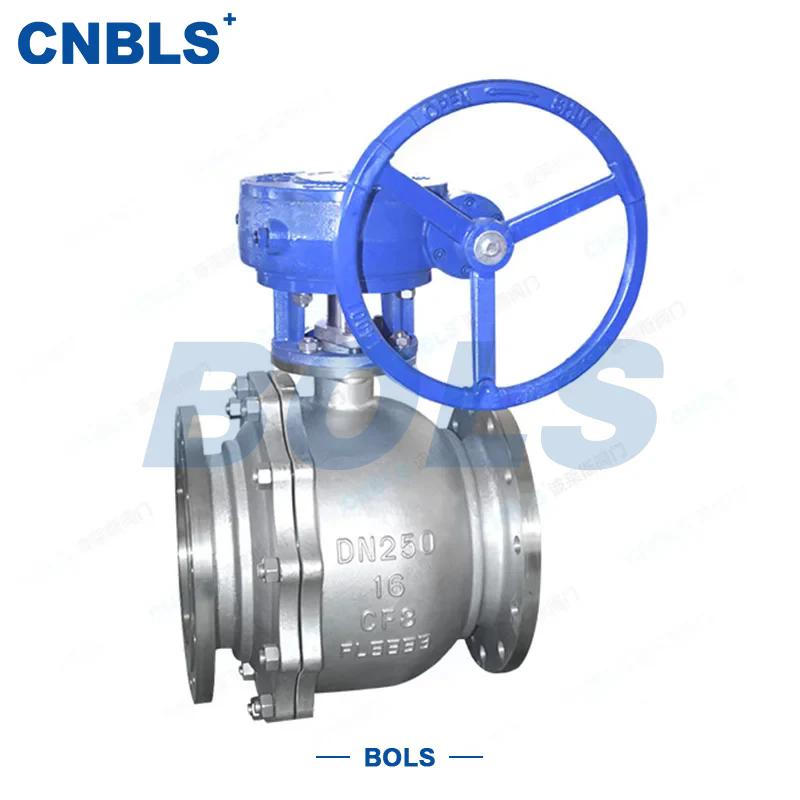
Zhejiang Bolaisi Valve Co., Ltd. is a modern enterprise specializing in the R&D, production, sales, and customization of industrial valves. With years of experience in the fluid control sector, the company operates standardized production workshops and utilizes precision machining equipment and professional testing procedures. We have established a rigorous, end-to-end quality control system covering raw material selection, precision casting, CNC machining, seal testing, and final product inspection to ensure the stability, durability, and suitability of every valve include Stainless Steel Flanged Ball Valve and GB Flange Ball Valve that leaves the factory.
What is a Ball Valve?
A ball valve is a 90-degree rotary fluid control valve and a core category of industrial shut-off valves. Its opening and closing mechanism centers on a spherical plug (ball) featuring a through-hole; the valve stem drives this ball to rotate 90 degrees around the valve body's centerline. This action enables the starting and stopping of flow, throttling, diverting, merging, and flow direction switching, making it an important control device in fluid transport systems.
These valves are primarily used in piping systems to isolate flow and regulate the flow rate of liquids, gases, and slurries. Thanks to low flow resistance, rapid actuation, excellent sealing performance, ease of operation, and adaptability to diverse working conditions, they have become one of the most widely used valve types in global industry. They are suitable for normal and high pressures, high and low temperatures, highly corrosive media, and fluids containing particulate impurities.
How Does a Ball Valve Work?
The core working principle is simple and reliable: fluid flow is controlled by rotating the spherical plug 90 degrees to switch the flow path. The valve operates with a simple mechanism and low failure rate. The specific operational logic is as follows:
1. Fully Open State: When the operating handle, worm gear, or pneumatic/electric actuator rotates the valve stem by 90 degrees, the central through-hole aligns parallel with the pipeline axis. The flow path remains unobstructed, allowing the medium to pass with minimal resistance and pressure loss.
2. Fully Closed State: Rotating the valve stem 90° in the reverse direction brings the solid sealing surface of the ball into full contact with the seat sealing surface. This blocks the pipeline flow path and provides reliable isolation between upstream and downstream media.
3. Regulation/Diverting State: Certain specialized designs, such as V-port or multi-port configurations, allow precise angular adjustment to change the alignment between the ball passage and the pipeline. This supports flow regulation, splitting, merging, and directional switching.
Core Functions
As multifunctional fluid control equipment, these valves integrate several capabilities to meet different operating requirements:
• Shut-off and Isolation: The fundamental function. When fully closed, the valve provides reliable isolation for pipeline maintenance, equipment shutdown, and process switching.
• Flow Regulation: V-port and adjustable designs provide precise control of medium flow rate and pressure. They are suitable for process pipelines requiring controlled flow characteristics.
• Flow Splitting and Merging: Three-way and four-way configurations can divide one flow stream into multiple paths or merge several streams into one, simplifying pipeline layouts.
• Impurity and Clog Resistance: Full-bore designs offer high flow capacity with minimal dead zones, making them suitable for slurries, sewage, and oil-gas mixtures containing particles, impurities, or fibers.
• High-Temperature and High-Pressure Sealing: Carbide or metal-to-metal hard-seated designs can withstand high temperature, high pressure, impact, wear, and erosion in demanding industrial environments.
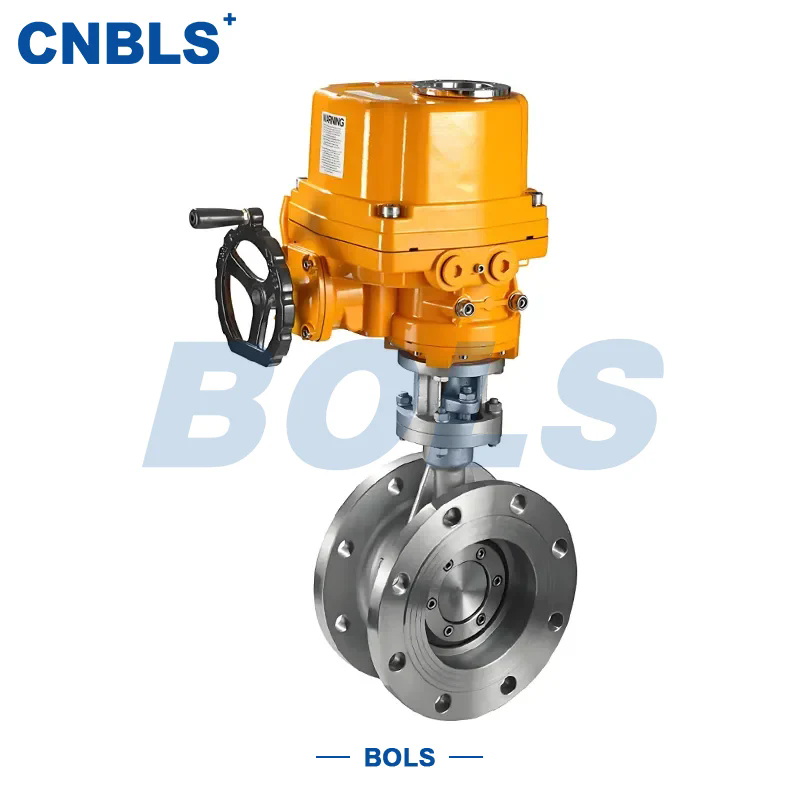
• Automated and Intelligent Control: When equipped with pneumatic, electric, or hydraulic actuators, the valve supports remote opening and closing, automated flow regulation, and integration with industrial control systems.
Core Components
Bolaisi ball valves feature a modular, precision-engineered design. Core components use selected materials and mature manufacturing processes to ensure stable long-term operation.
• Valve Body: The main pressure-bearing component, manufactured through precision casting or forging. Materials are selected according to pressure, temperature, and corrosion requirements.
• Ball Core: The primary opening and closing element. It undergoes high-precision polishing and surface treatment to achieve smooth operation, wear resistance, and reliable sealing.
• Valve Seat Seal: The critical sealing component. Soft seals may use high-purity PTFE, while hard-seated versions can utilize hard-alloy overlay welding for demanding applications.
• Valve Stem: The main transmission component, commonly forged from stainless steel. It provides the strength and torsional resistance required to transfer operating force.
• Packing Seal Assembly: Fills the gap between the stem and body to prevent external leakage while maintaining long-term sealing performance.
• Actuation Mechanism: Includes handles, worm gears, pneumatic actuators, and electric actuators for different manual and automated operating requirements.
• Fasteners: Bolts, glands, locating pins, and other structural components secure the assembly and help maintain long-term mechanical stability.
• Pressure Relief and Anti-Static Devices: Available on high-end industrial designs to release internal cavity pressure and dissipate static electricity in demanding operating environments.
Core Advantages
• Excellent Sealing Performance: Soft-seated designs provide reliable low-leakage sealing, while hard-seated versions are designed for demanding conditions involving high temperature, pressure, wear, and erosion.
• Rapid and Effortless Operation: 90° quarter-turn actuation eliminates reciprocating movement. Low operating torque and fast switching make these products suitable for frequent cycling.
• Minimal Fluid Resistance: Full-bore configurations provide a relatively unobstructed flow path, reducing pressure loss and helping improve energy efficiency.
• Simple and Durable Structure: A compact design with relatively few components facilitates maintenance while reducing potential failure points and operating costs.
• Exceptional Adaptability: Available configurations can accommodate standard pressure, high pressure, cryogenic, high-temperature, clean, particulate-laden, and corrosive media.
• Multifunctionality: Depending on configuration, the same product family can provide shut-off, regulation, flow diversion, flow reversal, and anti-clogging capabilities.
• Automation-Ready: Pneumatic, electric, and hydraulic actuation options allow integration into remote and intelligent pipeline control systems.
Application Scenarios and Industries
Thanks to their adaptability across different operating conditions, Bolaisi Ball Valves are widely used in major industrial and civil sectors.
• Oil & Gas Industry: Used in extraction, transmission pipelines, and storage facilities. Fixed high-pressure and hard-seated configurations are suitable for high-pressure, flammable, and impurity-laden media.
• Chemical Industry: Applied in fine chemicals, coal chemicals, corrosive media pipelines, and slurry transportation. Stainless steel, fluoropolymer-lined, and V-port configurations can address different chemical process requirements.
• Water Treatment & Environmental Protection: Used in municipal water supply and drainage, sewage treatment, purified water systems, and seawater desalination. Stainless steel and anti-corrosion designs provide reliable fluid isolation.
• Power & Metallurgy: Suitable for thermal power, hydroelectric, new energy, metallurgical cooling water, and high-temperature process lines. Cast steel hard-seated configurations are commonly selected for demanding conditions.
• HVAC & Construction: Used in commercial and residential HVAC, central air-conditioning, and gas pipeline systems. Brass and cast iron manual configurations offer practical installation and cost efficiency.
• Food & Pharmaceutical: Sanitary stainless steel versions are suitable for clean fluid transportation, where hygiene, cleanability, and contamination control are important.
• Shipbuilding & Heavy Industry: Used in marine ballast water, fuel, and hydraulic systems. Corrosion-resistant high-pressure designs can withstand humidity, salt spray, vibration, and impact.
• New Energy: Applied in photovoltaic, lithium battery, and hydrogen energy fluid control systems, where corrosion resistance, precision, and automation are important.
Selection Guide
To help global customers select suitable products, Bolaisi uses a standardized selection process based on five key operating parameters.
1. Confirm Medium Properties
• Clean water, air, clean oils: Cast iron, brass, or 304 stainless steel soft-seated versions.
• Acids, alkalis, seawater, corrosive media: 316L stainless steel, fluorine-lined, or duplex steel configurations.
• Slurries, particles, or fibers: V-port hard-seated or full-bore anti-clogging designs.
• Steam and high-temperature heat transfer oil: Cast steel hard-seated products designed for elevated temperatures.
2. Confirm Pressure and Temperature Parameters
• Low/Standard pressure (PN10/PN16): Standard products for civil and general industrial applications.
• Medium-to-high pressure (PN40–PN160 / Class 150–Class 900): Trunnion-mounted and forged high-pressure configurations.
• Ambient temperature (-20°C to 120°C): Standard soft-seated versions.
• High temperature (120°C to 450°C): High-temperature hard-seated designs.
• Cryogenic/Low temperature (-40°C to -196°C): Specialized cryogenic configurations.
3. Confirm Functional Requirements
• On/off isolation: Standard two-way full-bore designs.
• Precise flow regulation: V-port control configurations.
• Media diversion, splitting, or merging: Three-way and four-way multi-port products.
• High-frequency cycling or remote control: Pneumatic or electric automated versions.
4. Confirm Connection Method
• Small-bore, low-pressure piping: Threaded or compression connections.
• Medium-to-large bore industrial piping: Flanged connections.
• Sanitary/hygienic piping: Sanitary clamp connections.
• High-pressure, heavy-duty piping: Welded connections.
5. Confirm Actuation Method
• Manual, low-frequency operation: Lever-operated or worm gear versions.
• Explosion-proof, high-frequency cycling: Pneumatic actuation.
• Remote intelligent control: Electric actuation.
• Extra-large bore and ultra-high pressure: Hydraulic actuation.
Frequently Asked Questions
Q1: What are the key differences between ball valves, globe valves, and gate valves?
Ball valves use 90-degree rotary actuation, providing rapid operation, low flow resistance, reliable shut-off, and flexible flow switching. Gate valves are primarily intended for fully open or fully closed service in long pipelines with low pressure drop. Globe valves provide more controlled throttling but generally have higher flow resistance. The appropriate choice depends on the required flow function, pressure drop, regulation accuracy, and operating frequency.
Q2: How do I choose between soft-seated and hard-seated designs?
Soft-seated products provide excellent sealing and cost efficiency for clean media under moderate temperatures. Hard-seated versions offer better resistance to high temperatures, pressure, wear, and erosion, making them suitable for demanding industrial media such as high-temperature steam, particulate-containing fluids, and high-pressure process applications.
Q3: What are the differences between floating and trunnion-mounted designs?
Floating configurations have a relatively simple structure and are commonly used for small-to-medium bore sizes and low-to-medium pressure applications. Trunnion-mounted designs provide lower operating torque and greater stability, making them suitable for larger bore sizes, high-pressure applications, and long-distance transmission pipelines.
Q4: Can standard O-port designs be kept partially open for long periods?
It is generally not recommended to use standard O-port configurations in a partially open state for extended periods because high-speed media flow can cause erosion of sealing surfaces. For continuous flow regulation, a specialized V-port control design is more appropriate because its regulating geometry provides better control characteristics and resistance to throttling conditions.
Q5: Does Bolaisi offer customization?
Yes. Bolaisi provides customization according to operating conditions, including bore size, material, pressure rating, actuation method, connection type, and anti-corrosion treatment. Export documentation, test reports, and relevant certifications can also be provided according to project requirements.
Q6: Which is more suitable for explosion-proof applications: pneumatic or electric actuation?
Pneumatic actuation is widely used in flammable and explosive environments because it does not rely on electrical power at the actuator itself. Electric versions can also be applied when equipped with suitable explosion-proof motors and control systems. The final selection should be based on the hazardous-area classification and project safety requirements.
Q7: Are there directional requirements during installation?
Many standard designs support bidirectional flow and can be installed without a fixed inlet/outlet direction. However, certain specialized regulating or pressure-differential sealing configurations may have defined flow directions. Installation should therefore follow the product drawings and flow-direction markings when applicable.
Q8: What are the after-sales service and delivery lead times?
Bolaisi maintains inventories of standard products for rapid shipment, while customized orders are scheduled according to specifications and production requirements. Global customers can receive technical guidance, product selection assistance, installation support, test documentation, and standardized after-sales service.
Bolaisin Palloventtiili tarjoaa ensiluokkaista laatua nopealla toimituksella ja joustavalla räätälöinnillä. Ota yhteyttä jo tänään saadaksesi ilmaisen näytteen ja kilpailukykyisen tarjouksen!